
Manufacturing organizations are built to solve operational problems. They improve efficiency, reduce defects, and create consistency through systems, processes, and clear performance expectations. When something feels off, leaders often begin by looking at production flow, training, or process discipline.
That instinct makes sense. But many of the most persistent issues inside a manufacturing organization are not purely operational. They are leadership challenges.
In many cases, what appears to be a production issue, communication problem, or culture concern is actually the result of leadership misalignment. Priorities are interpreted differently. Expectations are not reinforced consistently. Departments begin moving in parallel rather than together. Over time, those leadership gaps affect execution across the organization.
Understanding how these patterns develop is the first step toward building stronger alignment and a healthier, more effective business.
Why leadership challenges in manufacturing often develop gradually
Leadership issues rarely appear all at once. More often, they develop as a company grows and the complexity of the organization increases.
A manufacturer may expand capacity, add locations, promote strong operators into management, or distribute decision-making across a wider leadership team. These are often signs of healthy growth. But growth also changes what leadership requires.
What worked in a smaller, more centralized organization may no longer work at scale. As responsibilities expand, leaders need more than operational expertise. They need shared direction, stronger communication, and greater consistency in how they guide people and decisions.
When leadership structures do not evolve alongside the business, the warning signs begin to surface:
- Managers interpret priorities differently
- Cross-functional communication becomes less consistent
- Decisions take longer to move through the organization
- Accountability becomes harder to maintain across teams
These are often early indicators of manufacturing leadership challenges, even before performance metrics begin to drop.
How leadership misalignment affects execution
One of the most common ways leadership problems in manufacturing show up is through execution gaps.
Production targets begin to slip. Projects move more slowly than expected. Teams struggle to coordinate across departments. On the surface, these may look like operational failures. In reality, they are often signs that leaders are not aligned around priorities, expectations, or decision rights.
When leaders communicate differently or emphasize competing goals, execution becomes uneven. Teams may work hard and still fail to move in the same direction. Small disconnects accumulate. Over time, the organization starts feeling more reactive, less coordinated, and harder to lead.
This is why manufacturing leadership alignment matters so much. In many organizations, improving leadership clarity resolves issues that once seemed like process or performance problems.
Leadership vs. management in manufacturing
Another common challenge is the transition from management to leadership.
Manufacturing companies often promote people who know the work well. That is understandable and often appropriate. Strong operators bring valuable credibility, technical knowledge, and problem-solving ability.
But as an organization grows, leadership demands change.
Management focuses on overseeing processes, solving immediate problems, and maintaining day-to-day performance. Leadership requires something broader. It involves aligning departments, developing other leaders, reinforcing accountability, and guiding the organization strategically through change.
When a business expects leadership-level coordination but continues relying on management habits alone, friction often follows. Leaders stay too close to the work, spend too much time solving short-term issues themselves, and struggle to create alignment across functions.
This distinction matters because many manufacturing management challenges are really leadership development challenges in disguise.
Why leadership strain often appears before operational decline
One of the most important realities in manufacturing is that leadership strain often appears before operational performance clearly suffers.
For a while, organizations can keep things moving. Experienced team members compensate. Managers work longer hours. Strong processes absorb some inconsistency. On paper, performance may still look acceptable.
But that stability can be misleading.
When leaders are misaligned, the strain shows up first in slower decisions, unclear communication, and increased dependence on a few key people. Eventually, those patterns become harder to contain. The organization loses agility. Coordination becomes more difficult. Operational problems that seemed sudden are often the result of leadership issues that have been building for some time.
Leaders who recognize these signals early are in a much better position to act before performance begins to erode.
Culture problems are often leadership problems
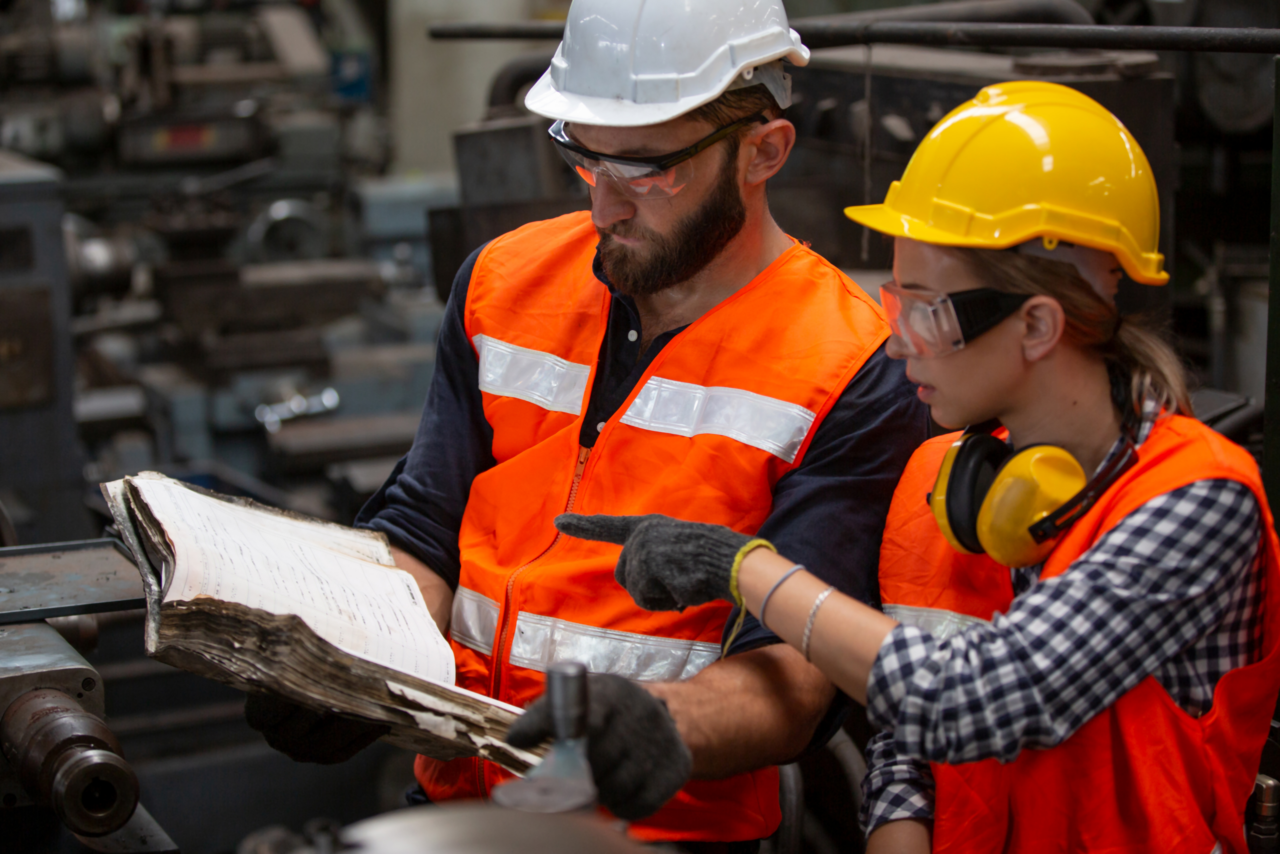
Manufacturing companies sometimes describe their challenges in terms of culture. Morale declines. Communication weakens. Departments become siloed. Collaboration feels harder than it should.
It is tempting to treat these issues as separate from leadership, or to place them primarily in the hands of HR. But culture is often shaped by what leaders model and reinforce every day.
Employees watch how leaders communicate, handle pressure, make decisions, and work across functions. They notice whether expectations are consistent, whether accountability is fair, and whether people are treated with respect. Over time, those patterns become the culture.
That means culture concerns are often leadership concerns first.
When leadership alignment improves, culture often improves with it. Teams experience more clarity, trust, and consistency because the people leading them are sending stronger, more unified signals.
When manufacturing leadership development becomes necessary
As organizations grow, leadership responsibilities become more complex. Senior leaders must balance operational oversight with strategic direction. Managers must lead larger teams while coordinating more effectively across departments. High-performing technical leaders may need support developing the interpersonal and organizational skills required at the next level.
This is often the point where manufacturing leadership development becomes essential.
Leadership development is not just about teaching general management concepts. It is about helping leaders build the awareness, communication habits, judgment, and alignment needed to support growth. In some cases, executive coaching can play an important role. In others, the right next step may be role clarification, team alignment work, or broader leadership systems support.
The key is choosing the right intervention for the stage of the organization and the nature of the challenge.
Aligning leadership from the plant floor to the executive team
Strong manufacturing organizations create alignment across every leadership layer.
Supervisors guide daily execution. Managers coordinate departments and reinforce accountability. Executives set direction, clarify priorities, and ensure the organization is moving toward the same goals.
When those layers are aligned, decisions move more clearly through the business. Communication is more consistent. Teams understand what matters and why. Departments collaborate more effectively because leadership is reinforcing shared priorities instead of competing ones.
When alignment weakens, friction follows. Different parts of the business begin operating from different assumptions. Decision authority becomes unclear. Managers receive mixed messages. Execution slows, even when the team is capable.
Leadership alignment is not a soft issue. It is a business performance issue.
Strong leadership supports sustainable growth
Manufacturing companies that invest in leadership strength often navigate growth more smoothly. Their leaders communicate more clearly. Their managers have greater confidence and better judgment. Their teams collaborate more effectively across functions.
These improvements do not just make the workplace feel better. They create the conditions for stronger execution, better decision-making, and more stable performance as the organization grows.
Over time, leadership quality becomes one of the clearest differentiators between organizations that scale well and those that struggle under pressure.
That is why the most effective manufacturing leaders do more than manage operations. They build alignment, develop people, and create the clarity that helps the whole organization perform at a higher level.
A clearer conversation can help identify the real issue
Every growing manufacturing organization encounters leadership challenges. The goal is not to avoid them entirely. It is to recognize them early enough to respond well.
If your organization is experiencing execution gaps, communication friction, unclear accountability, or signs of leadership strain, the most productive next step may be a focused conversation about what is happening beneath the surface.
At Dynamic Management Consulting, we help organizations make better people decisions through assessment-informed, human-led consulting. That includes helping leaders identify the patterns affecting alignment, team effectiveness, and long-term performance.
Schedule a Consultation to talk through what you are seeing inside your leadership structure and identify where the most useful next step may be.