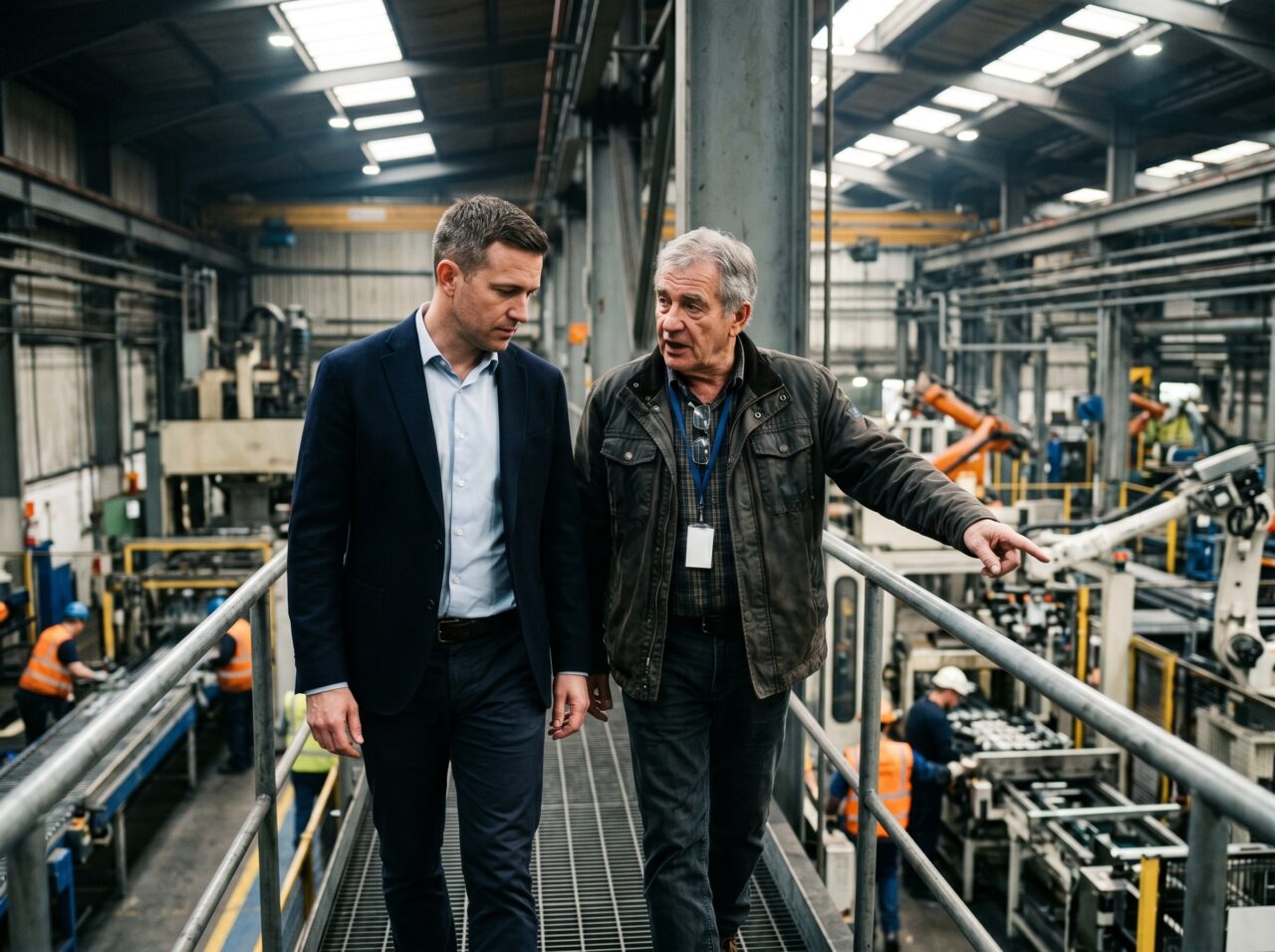
It usually starts with a conversation nobody planned for. A plant manager gives notice. A longtime operations leader announces retirement. A competitor recruits away the person who has held a second shift together for a decade. Within days, the same question comes up in every leadership meeting: who is ready to step in?
In many plants, the honest answer is no one. Not because the organization lacks capable people, but because no one was ever deliberately prepared for the role. That gap is exactly what manufacturing leadership succession planning is meant to close, and it is why so many companies feel blindsided when it is missing.
This is rarely bad luck. It is the predictable outcome of succession planning that is informal and reactive, which is how most manufacturers handle it by default. The next leader is assumed rather than identified, and readiness is hoped for rather than built.
Manufacturing carries this risk more acutely than most industries. Below, we look at why, what reactive succession actually costs a plant, and what an assessment informed leadership pipeline looks like when it is built at the plant level.
Why Succession Risk in Manufacturing Runs Deeper Than Most Industries
Every organization loses leaders eventually. What makes manufacturing different is how several pressures stack up at the same time.
An Aging, Experienced Workforce
Manufacturing skews older than the workforce as a whole. According to the U.S. Bureau of Labor Statistics, the median age of manufacturing workers in 2025 was 43.9, compared with 42.1 across all industries. Roughly one in four people working in manufacturing was 55 or older.
Plant leadership tends to come from the most experienced end of that range. Many of the people running plants today came up through the operation over decades, and a good number of them are closer to retirement than their organizations have fully planned for.
The broader talent market does not make this easier. Deloitte and The Manufacturing Institute project that manufacturers could need as many as 3.8 million new employees by 2033, with up to 1.9 million of those roles at risk of going unfilled. When the talent pool is that tight, replacing a seasoned leader from the outside gets harder, not easier.
A Thin Bench Below the Plant Manager
In a corporate setting, a senior leader may have several peers and direct reports who could reasonably step up. Plants rarely work that way. There are fewer leadership roles to begin with, less formal rotation between them, and often less deliberate investment in developing the layer just below the plant manager.
The result is a narrow bench. Plant manager succession often depends on one or two people, and sometimes on no one who has actually been prepared for the full scope of the role.
Geography and Shift Structures Narrow the Pool
Many plants operate in rural areas or as single site operations, which limits how many experienced leadership candidates live within reach. Relocating an outside leader is possible, but it adds time, cost, and uncertainty.
Shift structures create a quieter constraint. A capable supervisor on nights or weekends may rarely be seen by senior leadership and may miss the projects, meetings, and development opportunities that tend to happen during the first shift. Real potential can go unnoticed simply because of when someone works.
The Default Becomes Reactive Scrambling
Put these pressures together and a familiar pattern shows up. When a key leader leaves, the company either launches an external search under time pressure or promotes whoever is most available or most tenured. Neither choice is made from a position of readiness. Both are made because there was no plan.
What Reactive Succession Actually Costs
The cost of a leadership gap is not always visible on a spreadsheet right away, but plants feel it quickly.
Operational Disruption
A leadership vacancy does not pause production. Orders still ship, lines still run, and problems still need decisions. While the company scrambles, quality, safety, and morale absorb the gap. Supervisors fill in where they can, decisions stall or get made inconsistently, and the steadiness the leader provided starts to wear down.
The Rushed Promotion Problem
Promoting the most available or longest tenured person can feel like the safe choice. Sometimes it works. But tenure and readiness are not the same thing. A strong operator who excels at running a department may not yet have the strategic thinking, communication skills, or people leadership the next role requires.
When that gap goes unrecognized, the promotion does not resolve the succession risk. It relocates it. The organization now has a leader who is struggling in a new seat and a hole where their previous strength used to be.
The Pressure of an Outside Hire
Bringing in an external leader on a tight timeline carries its own risk. Even a highly qualified candidate needs time to learn the plant’s culture, systems, people, and operational realities. Under pressure, companies may also shorten their evaluation process, which raises the chance of a poor fit at a level where a poor fit is expensive. A structured approach to employee selection helps keep that evaluation rigorous even on a tight timeline.
External hiring has its place. The problem starts when it becomes the only option because nothing was built internally.
What a Defensible Manufacturing Leadership Pipeline Looks Like
A strong manufacturing leadership pipeline is not a list of names in a drawer. It is a deliberate process for knowing who could lead, what they would need to succeed, and how they are getting ready.
Identify High-Potential Leaders Before There Is a Vacancy
The first change is in the question being asked. Instead of “Who is next in line by tenure?” the question becomes “Who has the traits and competencies our future leadership roles actually require?”
Answering that well takes more than performance reviews. Current performance shows how someone handles their current role. It does not always show how they will handle a role with broader scope, more ambiguity, and greater responsibility for people.
Match Individual Profiles to Future Role Demands
This is where assessment data becomes useful. Validated workplace assessments can help compare a candidate’s current profile against the competency demands of the leadership role they would be stepping into, not just the one they hold today.
That comparison surfaces practical insight. One candidate may be a strong problem solver who is still building confidence in difficult conversations. Another may communicate well across shifts but need to develop longer range planning skills. Assessment data is only valuable when it is interpreted in context, which is why expert interpretation matters as much as the tools themselves.
Build Readiness Over Time
Being identified as high-potential is only the beginning. Readiness is built, and coaching paired with targeted development is the bridge between being identified and actually being prepared to step in when the moment comes.
This is how next generation plant leaders are developed. They get structured opportunities to close specific gaps, with feedback and accountability along the way, instead of being handed a title and left to figure it out.
Reduce the Pull of Familiarity and Convenience
Every organization has informal favorites. People who are well liked, highly visible, or simply familiar tend to be considered first. A structured, assessment-informed approach helps reduce the risk that succession decisions are driven by familiarity or convenience rather than readiness. It does not replace leadership judgment. It gives that judgment better information to work with.
What Manufacturing Leadership Succession Planning Looks Like at the Plant Level
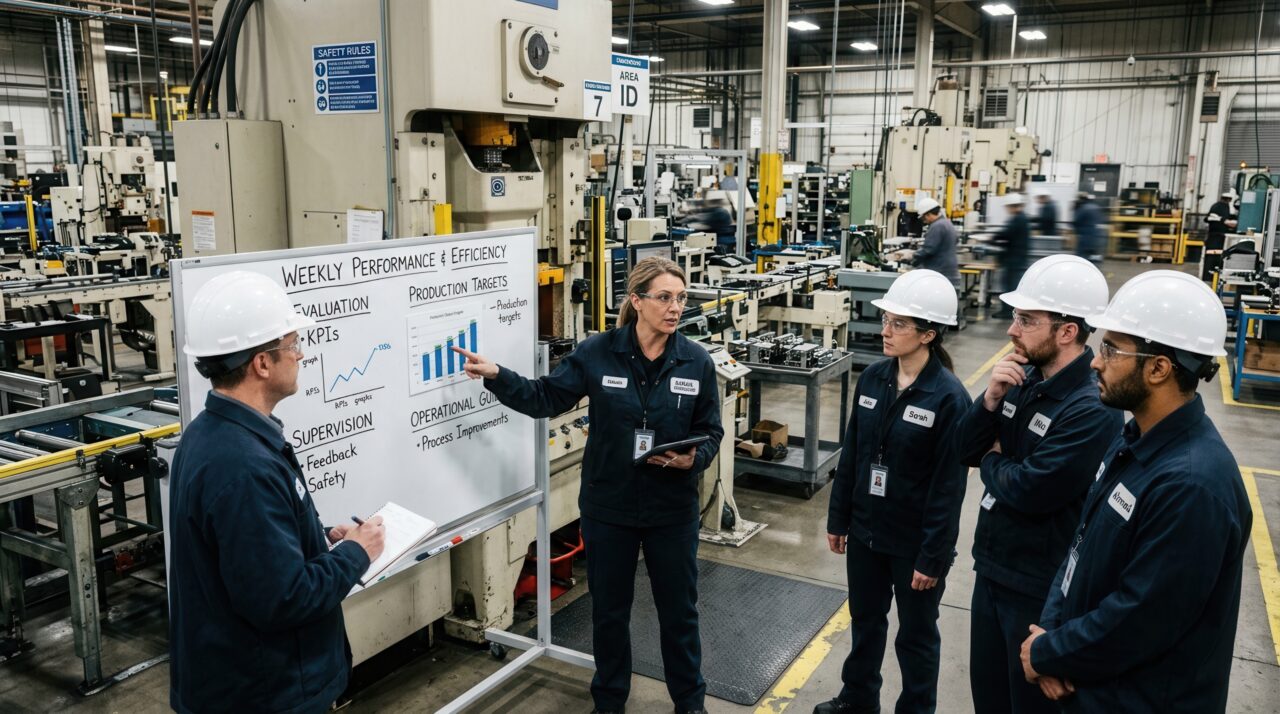
Succession planning can sound like a corporate exercise. At the plant level, it becomes practical and manageable when it is broken into a few clear steps.
Start with the roles at highest risk. Not every position carries the same succession risk. Look at plant leadership roles through three lenses: how long the current leader is likely to stay, how critical the role is to daily operations, and how deep the bench is behind it. The roles that raise concern on all three are where to begin.
Assess the internal bench. Evaluate your current high potential candidates against the competency profile for those specific roles. This gives you an honest picture of who is close to ready, who has potential with the right development, and where gaps may eventually call for an external search.
Build individualized development plans. Pair assessment results with targeted coaching so each candidate is working on the gaps that matter most for the role ahead. A “high-potential” label without a plan behind it rarely changes anything.
Revisit on a regular cadence. Succession planning is not a one time project. Plants change, priorities shift, and people move on. Reassessing the bench periodically keeps the plan accurate and keeps development moving.
Questions to Ask About Your Plant’s Leadership Bench
Before your next leadership transition forces the issue, these questions can help you gauge where you stand.
- If our plant manager or a key leader left tomorrow, do we have someone ready to step in, or would we be starting from scratch?
- Have we identified our high-potential leaders based on assessed competency, or based on tenure and convenience?
- Are we developing those individuals deliberately, or hoping readiness happens on its own?
- How would we know if a leadership candidate’s current profile actually fits the demands of the role they would be stepping into?
- When did we last revisit our succession bench, and has anything changed since?
If several of these are hard to answer, that is useful information in itself. It usually means the bench has not been examined as closely as the risk calls for.
How DMC Approaches Manufacturing Leadership Succession Planning
At Dynamic Management Consulting, our approach to succession starts with the same philosophy behind everything we do: validated data, interpreted by experts, applied to real decisions.
Assessment-Informed Identification
We evaluate current employees against the specific competency demands of future leadership roles, not just their performance in their current seat. That helps organizations see which candidates are positioned to grow into the next role and what it will take to get them there.
Coaching That Builds on Real Data
Once high-potential leaders are identified, our assessment-informed executive coaching starts from a clear baseline. Development focuses on the gaps that matter for the role ahead, with measurable goals and accountability, rather than generic leadership training.
A Validated, Defensible Process
Because the pipeline is grounded in validated assessment data and expert interpretation rather than tenure or gut feel, leaders have a clear rationale behind each succession decision. When a promotion is questioned, the reasoning is there to stand behind.
Built Around Manufacturing’s Realities
Matt Fearrington has spent nearly 20 years helping organizations make better people decisions, including manufacturers across North Carolina, Tennessee, and Virginia. That experience shapes how we approach succession. We account for shift structures, geographic constraints, and plant specific dynamics that a generic corporate succession framework tends to overlook, the same realities behind our approach to manufacturing talent management.
The Vacancy Is Inevitable. Being Caught Off Guard Is Not.
Manufacturing’s demographic and structural realities make leadership turnover a certainty. Someone will retire. Someone will be recruited away. The real risk is not that a leader eventually leaves. It is not knowing who is ready when they do.
Every year without a deliberate pipeline adds to that risk. And when a succession decision goes wrong, whether through a rushed promotion or a pressured outside hire, the cost shows up in the same places the leader was there to protect: production, quality, safety, and the confidence of the people on the floor.
Manufacturing leadership succession planning gives you a way to see that risk clearly and address it on your timeline.
If you want to know how ready your plant’s leadership bench really is, book a 15-Minute Call With Matt. We’ll talk through the roles that concern you most and what an assessment-informed approach to manufacturing leadership succession planning could look like, well before an actual vacancy puts your bench to the test.